Where our cocoa comes from, who grows it, and why dairy-free is better for the planet — openly and honestly, with none of the green spin.
CO2e per 1 kg of VGAN chocolate, at the factory
Skipping milk is one of the most effective things we can do to cut chocolate's carbon footprint. Ours comes in at about 0.7 kg CO2e per kilo at the factory, before logistics (measured with CarbonCloud) — against 4–13 kg CO2e for conventional milk chocolate. Same indulgence. A fraction of the impact. And we keep working to bring it lower.
Our cocoa comes from two origins: the Democratic Republic of the Congo and Sierra Leone. Since 2025 we have sourced it exclusively through Tradin Organic, via Tradin's own cocoa networks in both countries. It's a close, ongoing partnership — not cocoa bought on the spot market — and every purchase is traceable to its origin.
But traceability is only the start. Tradin's programmes connect our cocoa to the people who grow it: premiums for farmers and their communities, training in agroforestry, initiatives to raise farmer income, and village savings groups that give families — and women in particular — more financial security between harvests. No big words — just long-term relationships, traceability and better conditions, season after season.
All of the organic cocoa butter in our bars comes from the Democratic Republic of the Congo.
Our organic cocoa mass is split between both origins. How much of each ends up in a bar depends on its recipe.
Our cocoa is grown to certified-organic standards, without synthetic pesticides or fertilisers, and our bars are USDA Organic.
In Sierra Leone, farms are recorded with digital traceability and geolocation. In the DR Congo, farm mapping is part of a documented environmental due-diligence system. We know where our cocoa grows — not just which country it comes from.
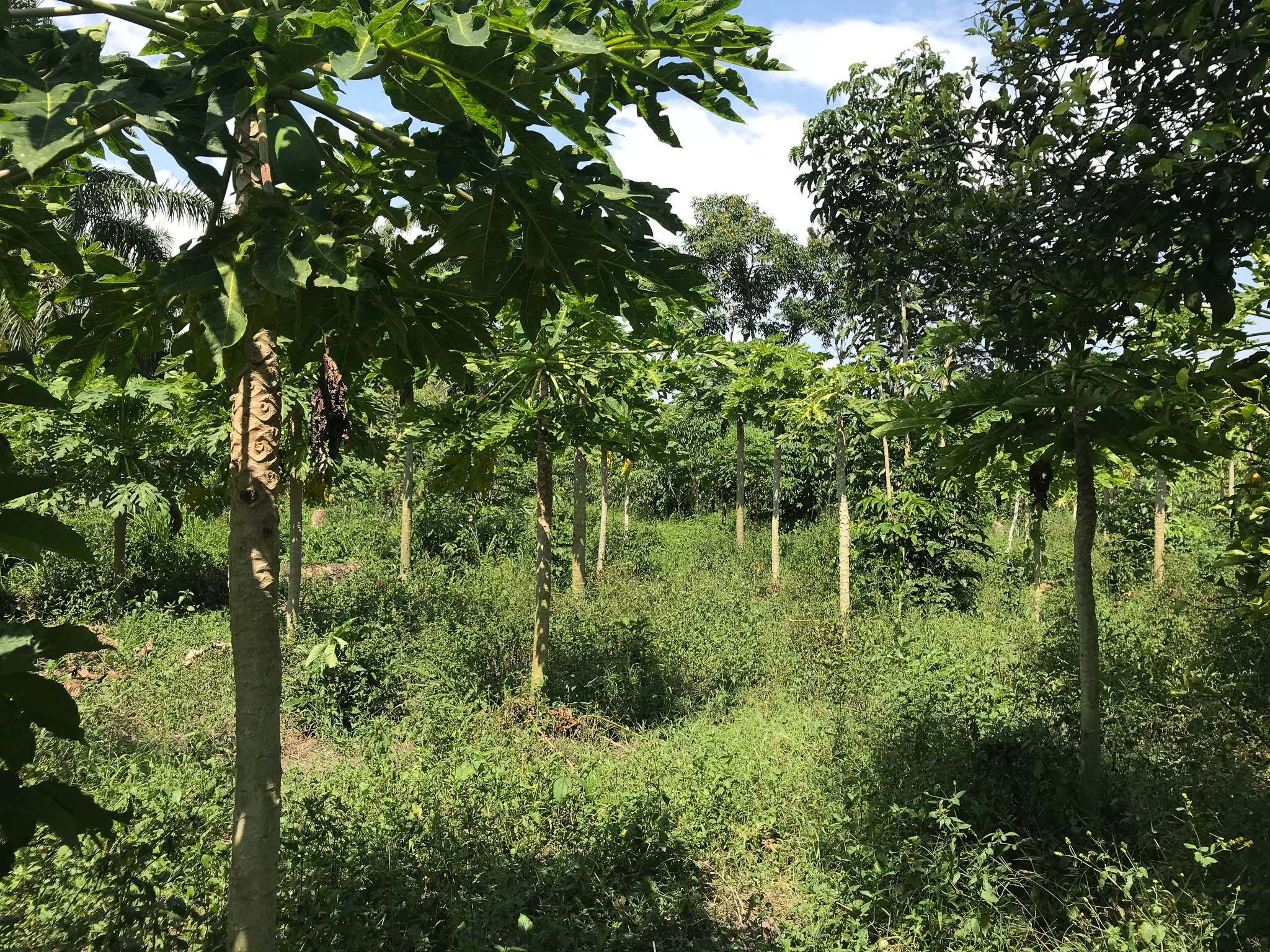
Cocoa is grown in agroforestry systems, where cocoa trees share the land with other trees and plants. In both origins, farms are checked for forest and protected-area risk.
In Sierra Leone, Tradin works through local cooperatives on farmer training, income initiatives, village savings groups and child-protection partnerships. In the DR Congo, its partnership with Esco Kivu includes community premiums and education initiatives. The aim: value that reaches whole communities, not just the harvest.
Want the detail behind any of this? Our partner publishes their sourcing and sustainability work in full at tradinorganic.com.
Fair labour and better livelihoods aren't a side project for us. They're conditions for doing business with us — for every bar we make. Here's how that works in practice.
Our Supplier Code of Conduct requires fair wages and working hours and safe, dignified working conditions, and it prohibits child labour, forced labour, discrimination and harassment. It applies to our suppliers' own supply chains too.
Suppliers are qualified before we work with them and reviewed over time — through documented traceability, supplier reporting and recognised third-party certification where it applies. If a supplier falls short, we require corrective action or end the relationship.
We support fair pay for cocoa farmers through responsible pricing and premiums, long-term relationships and a sourcing partner with farmer-support programmes on the ground.
Anne Floor van Dalfsen, Global Sustainability Manager at Tradin Organic, sits on the Board of Directors of VGAN chocolate AS — a direct line between the programmes at origin and the decisions we make.
B Corp™ certification means our work is assessed against independent standards for how we affect people and the planet — not just what we say, but what we can actually document. We carry that same thinking through the whole supply chain.
We've signed Norway's Guide Against Greenwashing (SKIFT), committing us to be concrete, transparent and accountable when we talk about sustainability. Here's some of what we can document.
Our bars are certified organic and vegan — USDA Organic in the US and EU Organic in Europe, and always dairy-free.
Every cocoa purchase runs through Tradin Organic and is tied to its farmer-income and community programmes in the DR Congo and Sierra Leone — under the labour and wage requirements of our Supplier Code of Conduct.
We're systematically reducing plastic and making our packaging easier to recycle. The goal is packaging that protects the chocolate well, with as little unnecessary material as possible.
We use CarbonCloud to calculate our chocolate's carbon footprint — based on the ingredients and the supply chain behind the product. That gives us a documented baseline to measure, compare and reduce the footprint over time.
Anyone can print a leaf on a wrapper. We started somewhere else — with the ingredients, the recipe, the supply chain and the numbers. A lower footprint is about how the chocolate is actually made, not how the wrapper looks.